Double crochet (dc) stitch reference: symbol, UK name and variations
Double crochet at a glance: US and UK names, chart symbol, height, turning chain and the stitches built on it. The full step-by-step tutorial is on our homepage.

2 min read

Stitch at a glance
- US terms
- Double crochet
dc - UK terms
- Treble crochet
tr
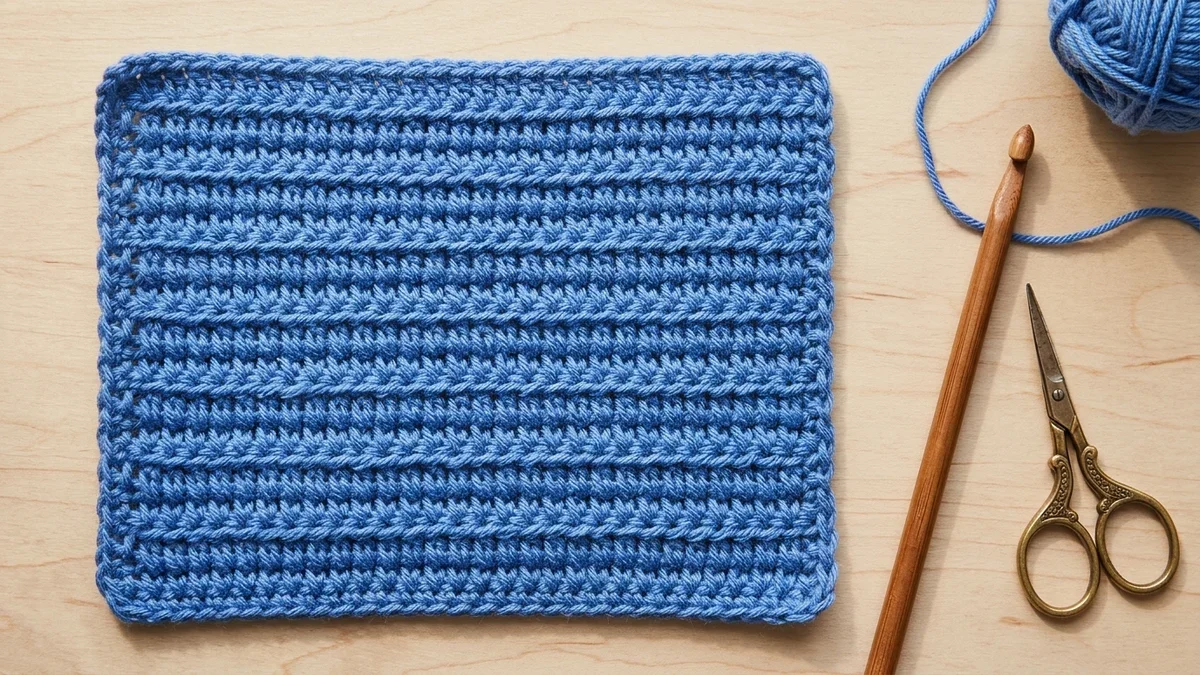
A quick reference for the double crochet stitch: what it is called in US and UK patterns, how charts draw it, how tall it is and which stitches are built on it. To learn it step by step, follow our double crochet tutorial with the four steps and a starting-chain planner.
US and UK names
- US terms: double crochet, abbreviated dc.
- UK terms: treble crochet, abbreviated tr.
- A UK pattern's double crochet (dc) is the US single crochet, so check which terms a pattern uses before you start.
Our US and UK crochet terms chart lists every stitch side by side.
Chart symbol
In crochet charts, a double crochet is drawn as an upright post with a short bar across the top and one diagonal stroke across the post. The stroke stands for its single yarn over; a treble crochet has two.
Height and turning chain
A double crochet stands about twice as tall as a single crochet.
At the start of a new row, chain 3 and turn your work. In most patterns this chain-3 counts as the first double crochet, so you skip the first stitch and work your next double crochet into the second stitch. At the end of the row, work the last double crochet into the top of the previous row's turning chain.
Some designers use a chain-2 that does not count as a stitch. Always follow what your pattern says, and count your stitches at the end of each row.
Stitches built on double crochet
- Foundation double crochet
- Standing double crochet
- Extended double crochet
- Linked double crochet
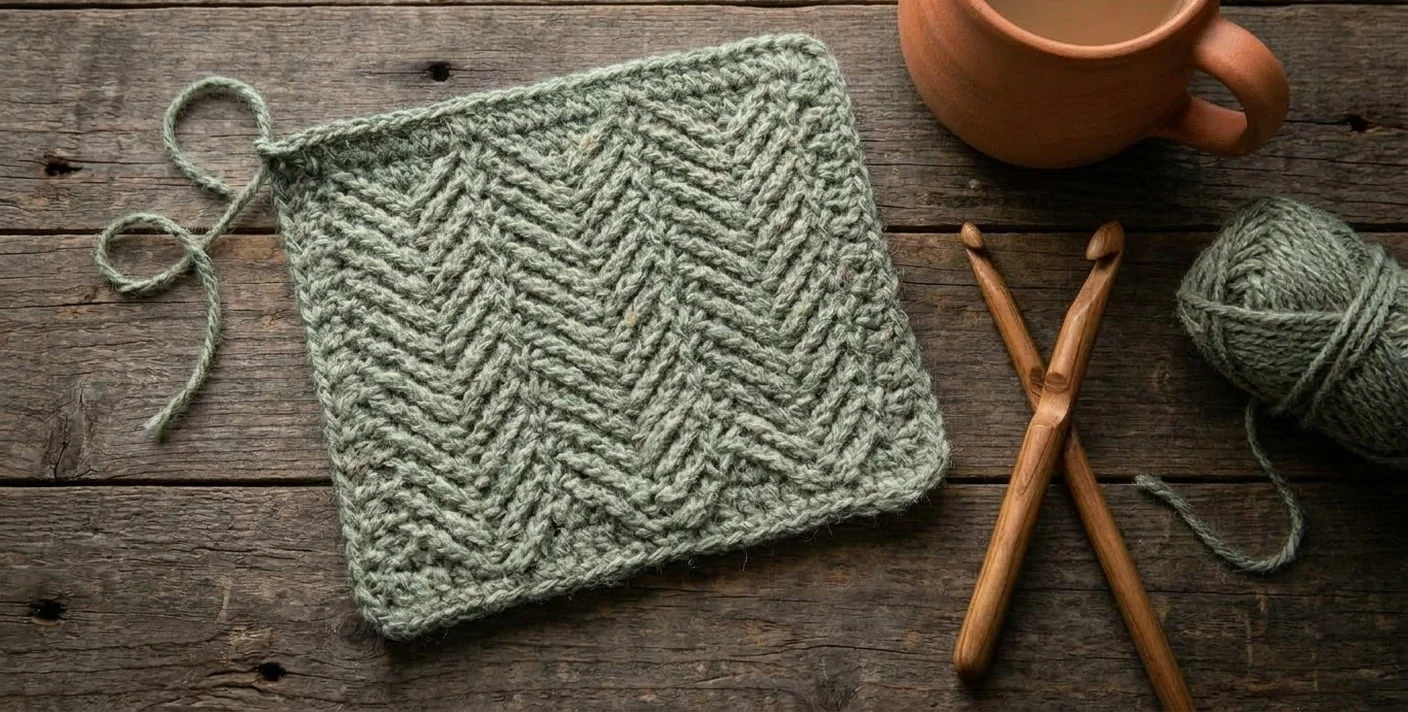
- Herringbone double crochet
- Crossed double crochet
- Back loop and front loop double crochet
- Front and back post double crochet
- Clusters, bobbles and popcorns
- V-stitch
- Shell stitch
- Double crochet two together (dc2tog)
- Double crochet increase




Questions & notes
No comments yet
Sign in or create a free account to comment under your profile and keep track of your replies.
Your email address is never published. Comments are moderated under our Community Guidelines; see our Privacy Policy for how we use your details.