Crochet kits
Crochet kits: complete starter sets, beginner bundles and project kits
Whether you are picking up a crochet hook for the first time or looking for a colour-coordinated yarn bundle for your next weekend project, the right crochet kit takes the guesswork out of matching yarn weights, hook sizes and pattern yardage. Not every kit includes the same supplies: some crochet starter kits are true all-in-one boxes with yarn, an ergonomic hook, stuffing, stitch markers and video lessons, while project yarn packs are made for crocheters who already own hooks and simply want pre-measured yarn and a pattern.
- Kit guides
- 25

Browse
Browse crochet kits by skill level, project and contents
Every kit we review is listed here with its skill level, kit format and what comes in the box, so you can tell at a glance whether a hook, video lessons or stuffing are included. We only list kits we have looked at ourselves.
No kits match those filters yet.
Crochet kit guides




Beginners
Crochet kits for beginners: easy starter kits to learn crochet
If you have never crocheted a single stitch, a standard pattern booklet can feel like reading a foreign language. The best crochet kits for beginners are designed to remove the three roadblocks that make new crocheters quit in their first hour: splitting yarn, hand cramps from bare metal hooks, and the tricky first ring of stitches.
When you are learning from scratch, avoid kits that give you thin, loosely twisted cotton yarn and a tiny 2.5 mm or 3 mm hook. Look instead for a crochet learning kit built around medium worsted (#4) or bulky (#5) yarn and a comfortable 4 mm (G-6) to 5.5 mm (I-9) ergonomic hook. To practise before your kit arrives, start our Learn to Crochet beginner course and our guide to holding a crochet hook and yarn.
What makes a beginner crochet kit truly frustration-free?
Non-splitting tube yarn or smooth worsted yarn
Traditional yarn is made by twisting several thin strands (plies) together. When a beginner pushes a hook into a stitch, it is easy to pierce between those strands, snagging the yarn and upsetting your tension. Some beginner kits use a braided tube yarn instead. Because it is built like a smooth, hollow cord, it cannot split, and every V-shaped stitch sits clearly on top of your work so you can count your stitches at a glance.
A pre-started magic ring (for amigurumi kits)
Most stuffed animal kits start in the round with a magic ring (magic circle). It makes a tight, gap-free centre, but it is notoriously tricky on day one. The best beginner amigurumi kits come with the first round already worked and held open with a locking stitch marker, so you can go straight to practising the single crochet stitch.
Right-handed and left-handed video tutorials
Abbreviations such as sc2tog or inc make far more sense when you can watch an instructor's hands in slow motion. If you are left-handed, check that the kit includes mirrored left-handed videos or diagrams rather than right-handed-only charts, and see our left-handed double crochet guide.
Flat starter projects vs. 3D plushies
If counting stitches in a continuous spiral feels intimidating, start with a flat beginner crochet set, such as a cotton dishcloth, a set of mug coasters or a chunky ribbed scarf, where you work back and forth in simple rows.
Kit types
Complete crochet starter sets vs. project yarn packs: understanding the 3 kit types
One of the biggest frustrations when shopping for a crochet starter kit online is opening the box to find there is no crochet hook inside, or buying a big supply bag with hooks and mini yarn balls but no instructions on what to make. Across yarn shops and craft retailers, "crochet kit" describes three quite different products.
1. All-in-one single-project kits (best for first-timers and gifts)
An all-in-one crochet kit contains every tool and material you need to finish one specific project. Inside you will usually find the exact yardage of yarn in the right colours, a matching crochet hook, a blunt tapestry needle for weaving in ends, locking stitch markers, project notions such as safety eyes and stuffing for plushies, and a beginner-friendly pattern, often with video lessons.
2. Pattern and yarn project bundles (yarn packs) (best for blankets and garments)
Many crochet kits with yarn sold by yarn companies and catalogue retailers are pattern and yarn bundles, often called yarn packs. They give you full-size skeins in coordinated dye lots plus a printed or digital pattern, but leave out the hook and notions, or offer the hook as an optional add-on. They suit crocheters who already own their favourite ergonomic hooks and do not want to pay for a duplicate basic hook with every blanket or sweater.
3. Multi-hook and acrylic yarn sampler sets (best for budget stash building)
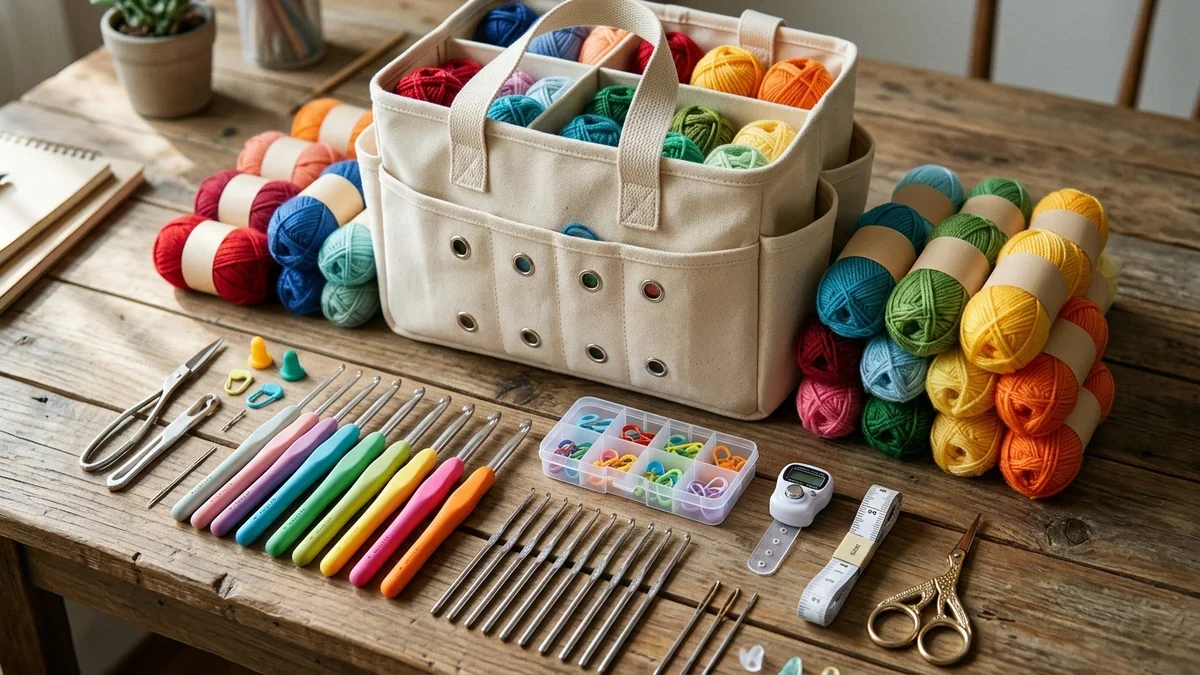
Searching for a crochet starter set or crochet materials on large marketplaces often turns up zippered cases with a range of hooks, stitch markers, row counters, scissors and a bundle of mini acrylic yarn balls. They are good value as a portable toolkit with a rainbow of yarn for mini amigurumi or granny square centres. Keep two limits in mind: each mini ball holds little yarn, not enough for a garment or blanket (check the yardage per ball), and most sets include no patterns or video lessons. If you only want hooks, see our crochet hooks and hook sizes guide.
Amigurumi
Amigurumi and animal crochet kits: plushies, dinosaurs, penguins and more
Crochet amigurumi kits, named after the Japanese art of crocheting small stuffed yarn creatures, are one of the most popular ways into modern crochet. Amigurumi projects are small, portable and worked mostly in single crochet (sc), so you can finish a charming desk companion in a weekend rather than spending months on a full-size afghan. When browsing crochet animal kits and crochet stuffed animal kits, look closely at how the animal is built before you buy.
Best first amigurumi shapes vs. intermediate animal kits
Level 1: round, potato-shaped animals (best for true beginners)
The easiest amigurumi kit for beginners has one rounded body and very little sewing. Look for a penguin, bee, chick or whale kit, or a simple round frog or dinosaur. These designs teach you to work in continuous rounds, make basic increases (inc), work neat decreases so the stuffing does not peek through, and attach two small wings, fins or ears.
Level 2: multi-part and textured plushies (best for confident beginners)
Once you are comfortable counting rounds, step up to an axolotl kit, which adds loopy or picot gills, or a highland cow kit, which teaches fringe hair and horn shaping. Turtle, sloth, elephant, bunny and unicorn kits sit at this level too.
Level 3: fine-yarn and detailed sculpture kits (intermediate to advanced)
Some amigurumi kits use finer DK (#3) or sport-weight (#2) cotton or wool with a 2.5 mm to 3.5 mm hook. They make heirloom-quality dolls, dragons and realistic dogs and cats, but they need steady tension and experience sewing several legs, snouts and colourwork pieces together.
Safety note for parents
Most amigurumi kits include plastic snap-in safety eyes. Despite the name, they can be a choking hazard for children under 3 if chewed loose. If you are making a stuffed animal for a baby or toddler, embroider sleepy eyes with yarn from your kit instead.
Projects
Crochet kits for specific projects: blankets, bags, sweaters and home decor
If stuffed animals are not your style, project-based crochet sets let you make clothes, bags and home pieces with pre-matched yarn.
Crochet blanket, throw and granny square kits
A crochet blanket kit is ideal for relaxing evening stitching. Blankets take a lot of yarn, often well over 1,000 yards, so a coordinated blanket pack makes sure every skein comes from the same dye lot and saves you running short before the border.
- Beginner blanket kits: look for chunky crochet blanket kits for beginners that use bulky (#5) or super bulky (#6) yarn worked in simple double crochet stripes. A granny square blanket kit lets you crochet portable motifs one square at a time before joining them.
- Intermediate and designer blanket yarn packs: geometric, mosaic and colourwork packs and year-long temperature blanket kits give you many curated shades of DK or worsted yarn with detailed charts.
Before changing a blanket kit's size, run your numbers through our blanket size calculator and granny square blanket calculator.
Crochet bag, market tote and purse kits
A crochet bag kit or crochet purse kit is one of the fastest, most rewarding projects you can make, and bags need no garment sizing.
- Beginner totes and granny square bags: a crochet bag kit for beginners usually uses sturdy cotton cord, t-shirt yarn or worsted cotton, worked into a flat mesh market bag or a granny square tote.
- Raffia and structured handbag kits: summer shoulder bags, clutches and bucket bags often use raffia or tape yarn. Raffia has almost no stretch compared with wool or acrylic, so practise on a cotton tote before a structured raffia handbag.
Crochet sweater, cardigan, hat and scarf kits
Start with small accessories before full garments.
- Hats, beanies and scarves: a crochet scarf kit or crochet hat kit, such as a chunky ribbed beanie or a summer bucket hat, is a short project that teaches you to work in the back loop only (BLO) for stretchy ribbing.
- Sweaters and cardigans: a crochet sweater kit or crochet cardigan kit, including hexagon granny cardigans and top-down raglans, usually lets you choose your size so the kit includes the right number of skeins. Always crochet a 4 x 4 inch gauge swatch first and check it with our crochet gauge calculator so the finished piece fits as intended.
Botanical, plant, flower and home decor crochet kits
Want houseplants that never need watering, or practical textures for your living room?
- Botanical and flower kits: a crochet plant kit, cactus kit, succulent kit or crochet flower kit combines simple amigurumi shaping with a small pot, and makes a popular desk gift.
- Baskets, coasters and cushions: a crochet coaster kit or dishcloth set is one of the easiest first flat projects, while a chunky crochet basket kit, cushion or rug kit uses thick cotton cord and a large hook to build sturdy home storage quickly.
Who it's for
Crochet kits for adults, kids and gift shoppers
Here is how to match the right kit to the maker's age and experience.
Crochet kits for adults: from mindful beginners to advanced makers
When adults look for crochet kits for adults or crochet craft kits for adults, they usually want two things children's kits lack: full-size ergonomic tools that will not cramp adult hands, and a project they will be proud to display or wear.
- For adult beginners looking for stress relief: choose a beginners crochet kit for adults with a full-length soft-grip hook, calm step-by-step video lessons and a modern result, such as a plant hanger, a set of coasters, a chunky cushion or a small desk amigurumi.
- For experienced adults: skip starter boxes and look at advanced crochet kits: Tunisian crochet kits, tapestry bags, fine floral jewellery kits or garment and shawl yarn packs in natural fibres.
Children's crochet kits: age-appropriate sets for kids and teens
The wrong children's crochet kit can frustrate a young crafter in minutes. Many toy-shop kits include short, stubby plastic hooks with rough seams that snag and split cheap acrylic yarn.
- Ages 8 to 10 (young beginners): look for a children's crochet set with thick, smooth yarn or braided cord and a smooth 5 mm to 6 mm metal hook with a soft handle. Small, quick projects such as a bookmark, a friendship bracelet, a mini keychain or a simple pouch keep them interested.
- Ages 11 and up, and teens: most pre-teens and teenagers have the dexterity to follow a video-guided beginner amigurumi kit, such as a frog or an axolotl, or a bucket hat, and enjoy kits with extra yarn for accessories.
How to choose a crochet gift set (including licensed character kits)
Shopping for a crochet gift set or a holiday crochet advent calendar kit for a friend or family member? Keep two things in mind.
- Check the skill level on licensed character kits. Boxed kits featuring popular films, books and cartoons make exciting gifts for fans, but many are not meant for complete beginners: they often use thin yarn, small hooks of around 3 mm to 3.5 mm and detailed shaping, and novelty-shaped hooks can be hard to stitch with. For a true beginner, choose a character kit clearly labelled for beginners, with smooth yarn and video lessons.
- Consider a monthly crochet kit club for someone who already crochets. A subscription sends a new project, or the next part of a blanket, every month.
Compare
Crochet kit comparison guide: which kit type fits your goals?
Use the comparison matrix below to compare the six main crochet kit formats before you look at individual kits.
| Kit format | Best for | Typical contents | Yarn and hook | Skill level | Key advantage | Watch out for |
|---|---|---|---|---|---|---|
| Video-guided tube-yarn amigurumi kit | Complete beginners (adults and teens 11+) and easy gifts | Pre-started tube yarn, ergonomic hook (about 4 mm), stuffing, safety eyes, needle, stitch markers, right- and left-handed videos | Worsted (#4) braided tube yarn, about 4 mm hook | First-timer | No yarn splitting; a pre-started magic ring removes the biggest beginner hurdle | Higher cost for one small plushie |
| Beginner flat project kit (dishcloth, coaster or scarf) | Beginners who prefer flat rows to 3D spirals | 2 or 3 full skeins of cotton or wool/acrylic yarn, 5 mm to 6 mm hook, tapestry needle, photo booklet | Worsted (#4) or bulky (#5) smooth yarn, 5 mm to 6.5 mm hook | First-timer | Teaches turning rows, counting edges and even tension on a useful item | Wooden hooks can drag on thin cotton at first |
| Multi-hook and mini-skein sampler set | A full hook set and a rainbow of yarn for small motifs | Several hooks, mini acrylic yarn balls, stitch markers, scissors, case | Light or medium acrylic mini balls, ergonomic or bare aluminium hooks | Beginner to intermediate | Low cost per piece; reusable zip case | Usually no patterns or instructions; mini balls are too small for large items |
| Blanket and afghan yarn pack | Coordinated dye lots for throws and afghans | Full-size skeins plus a printed or digital pattern (some include video classes) | DK (#3), worsted (#4) or chunky (#5) acrylic, wool or cotton | Easy to advanced | Matching dye lots and enough yarn for an heirloom blanket | Hook rarely included; check the hook size before ordering |
| Modern wearable and bag kit | Totes, sweaters, cardigans and hats | Full-size skeins (cotton, raffia, merino), printed pattern, hook often an optional extra | Cotton cord, raffia or super chunky wool, 4.5 mm to 12 mm hook | Easy to intermediate | Modern designs with a choice of colours and garment sizes | Some patterns use UK crochet terms; the hook may cost extra |
| Licensed character and book kit | Fans who already know the basics | Pattern book, mini acrylic or cotton yarn balls, basic metal or plastic hook, stuffing, needle | Fine or sport (#2 to #3) multi-ply yarn, 3 mm to 3.5 mm hook | Intermediate | The book has patterns for more characters than the yarn included | Sometimes sold as beginner; thin, splitty yarn and basic hooks frustrate novices |
Buying guide
How to choose a crochet kit: essential contents and quality checklist
Before adding any crochet kit to your basket, spend 30 seconds checking the listing against this checklist.
What a complete crochet kit should include
If you want to open the box and start stitching with no extra trip to the shop, check that the listing includes all six essentials:
- Project yarn, with a little extra. Good beginner kits include spare yarn so you can pull out (frog) your first practice stitches or redo a piece without running out.
- A hook in the right size for the yarn, ideally 4 mm to 6 mm with a soft or ergonomic handle. Our hook size converter helps if a kit lists only US letters or only millimetres.
- Locking stitch markers (at least 3 to 5) to mark the first stitch of every round in amigurumi or hold a loop when you pause.
- A blunt tapestry needle for weaving in ends and sewing on amigurumi ears or limbs. A metal needle glides through tight stitches more easily than a bendy plastic one.
- Project notions such as fibrefill stuffing and safety eyes for toys, or buttons and handles for cardigans and bags.
- Clear instructions, written plus video or diagrams, that say whether they use US or UK crochet terms.
Why yarn weight, fibre and hook ergonomics matter
How much you enjoy a kit comes down to how the hook and yarn feel in your hands.
- Choose light, bright yarn first. Avoid beginner kits in black, navy or dark brown: dark yarn makes it very hard to see where to insert the hook. Yellow, sky blue, mint, peach or light grey make every loop stand out. Our guide to yarn weights explains the numbers on a label.
- Avoid fuzzy novelty or chenille yarn on day one. Velvet and fluffy chenille look irresistibly soft, but the fuzz hides the stitches. Save them for a later project, once your fingers can feel the stitches by touch.
- Upgrade a flimsy kit hook. If a gift kit comes with a thin bare metal hook that digs into your palm, or a bendy plastic hook that squeaks against acrylic yarn, put it aside and use a comfortable ergonomic hook in the same millimetre size.
Crochet kit vs. buying individual supplies: which is better?
One question comes up in crochet forums all the time: should you buy a crochet starter kit, or a hook and yarn separately? Here is the honest breakdown.
- Buy a crochet kit when you want no decisions to make, you want a specific multicolour amigurumi animal (buying several full skeins plus safety eyes, stuffing, a hook and a pattern for one small toy often costs more than a kit), or you want a structured video course that walks you through every stitch.
- Buy individual supplies when you are on a tight budget and simply want to practise the basic stitches. One 5 mm (H-8) ergonomic hook and one skein of smooth, light worsted (#4) acrylic yarn give you hundreds of yards of practice; our beginner crochet supplies guide lists what else helps.
Free tools
Free crochet calculators, stitch guides and beginner tutorials
Working on a crochet kit and need a quick reference or a stitch refresher? Every calculator, conversion chart and stitch guide on our site is free, with no account needed.
- Complete beginner guide to crochetStep-by-step lessons on holding your hook, making a slip knot, controlling yarn tension and reading your first pattern.
- Crochet stitch libraryClear breakdowns of the chain (ch), single crochet (sc), half double crochet (hdc), double crochet (dc) and more.
- US vs. UK crochet terms converterBought a kit from a UK brand? Translate UK dc and tr into US terms in seconds.
- Crochet hook size chart and guideConvert millimetres to US letters and UK sizes, and find a comfortable hook for long sessions.
- Crochet yarn and gauge calculatorsSubstituting yarn or resizing a blanket? Work out yardage, gauge and granny square counts.
- Free crochet patternsYour second project for the hook and leftover yarn from your kit: coasters, amigurumi, hats and blankets.
FAQ
Frequently asked questions about crochet kits
Do all crochet kits come with a crochet hook and everything you need?
No. All-in-one beginner kits, such as amigurumi starter boxes, include yarn, a crochet hook, stuffing, stitch markers, a yarn needle and instructions. Many blanket, garment and afghan kits sold by yarn brands include only the yarn and pattern (yarn packs). Always check the listing for a hook, and the hook size the pattern needs, before ordering.
What is the easiest crochet kit to start with for a complete beginner?
The easiest kit for a true first-timer is either a pre-started tube-yarn amigurumi kit (a simple round penguin, bee or chick with step-by-step video lessons) or a flat cotton dishcloth or coaster starter kit using medium (#4) or bulky (#5) yarn and a 5 mm to 6 mm ergonomic hook. Both avoid splitting yarn and complex shaping.
What is the difference between a crochet starter kit and a regular crochet kit?
A crochet starter kit is made for someone who owns no crochet supplies: it includes basic tools (one or more hooks, stitch markers, a tapestry needle) with beginner yarn and basic stitch lessons. A regular crochet kit, or project kit, focuses on the materials for one specific design and often assumes you already know the basic stitches and own standard hooks.
Why do beginner amigurumi kits use tube yarn instead of regular yarn?
Not all do, but tube yarn suits beginners. Traditional multi-ply yarn is made of twisted strands that can untwist and split when a hook is pushed through a tight stitch. Tube yarn is braided like a smooth hollow cord: it cannot split, does not fray when you pull out mistakes, and makes every V-shaped stitch easy to see and count.
Are crochet kits suitable for left-handed beginners?
Yes, as long as the kit includes left-handed instructions or mirrored video tutorials. The tools in a kit (hooks, yarn, needles and stitch markers) work in either hand. When choosing a beginner kit for a left-handed crafter, check that the brand offers left-handed videos or flipped stitch diagrams, or use our left-handed double crochet guide alongside it.
What age is appropriate for a children's crochet kit?
Many children develop the two-handed coordination and tension control a children's crochet kit needs around ages 8 to 10. For that age, choose a kit with smooth bulky yarn and a 5 mm to 6 mm metal hook with a comfortable handle rather than stubby plastic toy hooks. From about 11, most children and teens can use a standard adult beginner amigurumi kit.
Are licensed character crochet kits (like Harry Potter or Disney) good for beginners?
Often not. Many boxed character kits are intermediate level: they use thin yarn, small hooks of around 3.5 mm and detailed multi-part patterns that frustrate novices. Check the skill level on the box, and for a beginner choose a character kit clearly labelled for beginners, with smooth yarn and video lessons.
Do crochet kits use US or UK crochet terminology?
It depends on where the brand is based: North American brands generally use US terms, and many British brands use UK terms. Always check the pattern key first, because a UK double crochet (dc) is a US single crochet (sc). Our US vs. UK crochet terms converter translates a whole pattern.
Keep exploring
- Stitch libraryEvery stitch with US and UK names, abbreviations and step-by-step instructions.19 stitches
- PatternsProjects with the skill level, yarn weight and hook size listed up front.73 patterns
- GuidesTechniques, terminology, yarn and the basics, explained plainly.21 guides
- HooksReviews and buying guides, from double-ended to Tunisian hooks.4 articles
- CalculatorsGauge, even increases, yarn amounts and blanket layouts, worked out for you.55 calculators