Beginner Crochet Supplies: What You Need to Start (and Which Yarn to Choose)
A hook, a ball of yarn, a needle and scissors are all you need. Here is which hook and yarn to pick first, how to read a yarn label, and what to avoid.

7 min read

By Double Crochet Editorial Team | Last Updated: November 2026
You only need five basic items to start crocheting today: a 5.0 mm (US H-8) crochet hook, one skein of smooth #4 medium (worsted-weight) yarn in a light solid color, a pack of locking stitch markers, a blunt large-eye tapestry needle, and a pair of scissors. Skip the 80-piece novelty tool sets—starting with one comfortable hook and an easy-to-see yarn lets you learn stitch anatomy without fighting your tools.
US vs. UK Terminology Note: Crochet tools are universal, but labels differ slightly by region: a5.0 mmcrochet hook is marked H-8 in the US and Size 6 on older UK charts, while#4medium worsted yarn is often labeled Aran in the UK and 10-ply in Australia.
The 5-Item Beginner Crochet Starter Kit
Before buying project bags, yarn bowls, or blocking boards, put together this exact 5-item starter kit. Every item below serves a specific mechanical purpose during your first practice swatch:
Essential Supply | Exact Specification to Buy First | What It Does | Household Substitute (For Day 1) |
|---|---|---|---|
1. Crochet Hook |
| Pulls loops of yarn through stitches and sets the size of every loop on its cylindrical shaft. | None—you need at least one hook! |
2. Practice Yarn | 1 skein ( | Forms the stitches; light, smooth worsted yarn makes every top | None. |
3. Locking Stitch Markers |
| Clips into the first and last stitch of every row so your edges never shrink or grow. | Safety pins, bobby pins, or paperclips. |
4. Tapestry Needle | Size | Threads your cut | A bobby pin (in a pinch), though a blunt needle is much easier. |
5. Scissors | Small sharp embroidery/stork scissors (or any sharp household scissors) | Cuts the working yarn cleanly without fraying the plies when you fasten off. | Kitchen or desk scissors. |
Choosing Your First Crochet Hook (Size, Material, and Throat Shape)
Walk down the craft store aisle and you will see hooks ranging from needle-thin 1.0 mm steel lace hooks to broomstick-thick 25 mm jumbo hooks.
- Start with
5.0 mm(US H-8) or5.5 mm(US I-9): This mid-range size fits comfortably in your fingers, pairs directly with standard#4worsted-weight yarn, and creates stitches large enough to count at a glance. (See our full guide to crochet hook sizes for every metric and letter size.)
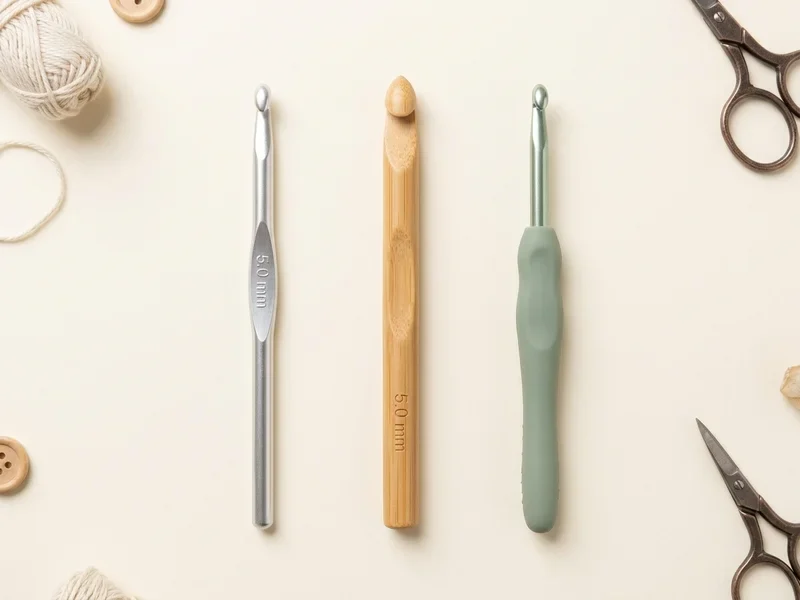
Hook Materials Compared for Beginners
- Anodized Aluminum (Best All-Rounder): Smooth metal allows acrylic, wool, and cotton yarn to glide effortlessly over the shaft without squeaking or dragging.
- Ergonomic Soft-Grip Handle (Best for Hand Comfort): An aluminum hook core wrapped in a thick, cushioned rubber or elastomer handle (
12–15 mmwide). Because your fingers don't have to pinch a thin metal rod, ergonomic handles prevent hand cramping while you learn how to hold the hook. - Bamboo or Warm Wood (Best for Slippery Yarns): Lightweight and warm to the touch with slight natural surface friction that keeps slick yarns from sliding off the tip too quickly.
Choosing Your First Yarn (Fiber, Color, and Weight)
Your choice of first yarn determines whether learning to crochet feels relaxing or impossible. Follow three rules for your first skein:
- Pick Category
#4Medium (Worsted Weight): Avoid lace or sock yarn (too tiny to see) and avoid giant#7jumbo yarn (hard to maneuver with your wrists). Category#4Medium—or#5Bulky—is the sweet spot. Read our complete guide to yarn weights for the full0–7system. - Pick a Light, Solid Color: Choose cream, oat, sage green, sky blue, terracotta, or mustard yellow. Light solid colors reflect room light into the valleys between threads so you can clearly distinguish the front loop, back loop, and post of every stitch.
- Choose a Smooth, Plied Fiber:
Beginner Fiber Option | Pros for Learning | Cons to Keep in Mind | Best First Projects |
|---|---|---|---|
Smooth Worsted Acrylic (or Anti-Pilling Acrylic) | Inexpensive, holds up to repeated unraveling ("frogging") without fraying, machine-washable, and has gentle bounce. | Cheap bargain-bin acrylics can feel slightly scratchy; cannot be used for hot pot holders (melts under high heat). | Practice swatches, scarves, beanies, and throw blankets. |
Smooth Cotton or Cotton-Acrylic Blend | Zero fuzz ("halo"), giving the sharpest stitch definition of any fiber—every |
| Dishcloths, coasters, potholders, market bags, and amigurumi. |
Superwash Wool or Wool-Acrylic Blend | Forgiving elasticity—stretches gently over the hook, making tight beginner stitches much easier to work into. | More expensive than plain acrylic; non-superwash wool will felt and shrink if machine-washed hot. | Winter hats, cowls, mittens, and garments. |
How to Read a Yarn Label in 30 Seconds
Every ball band prints four essential pieces of information that tell you how the yarn behaves before you buy it:
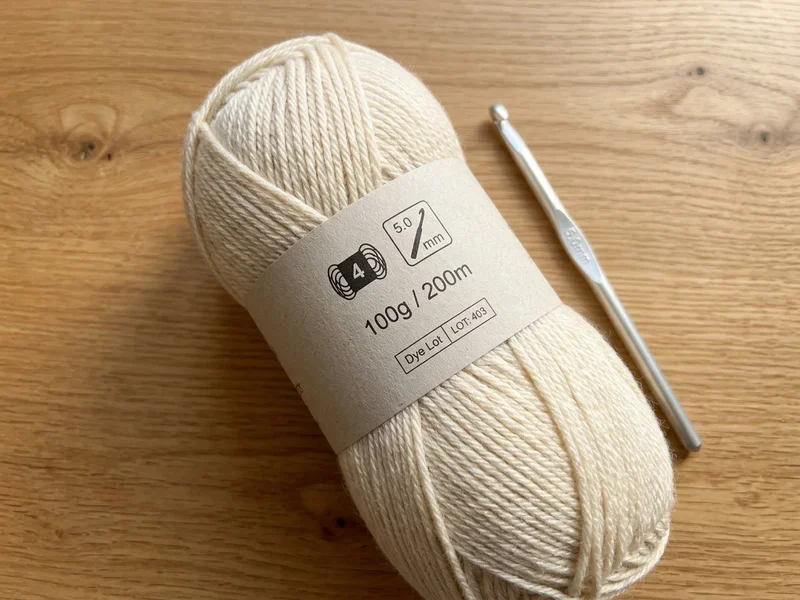
- The Yarn Weight Icon (
#0to#7): Look for the small skein symbol with a number in the center.4(Medium) is your target for beginner worsted-weight yarn. - The Crochet Hook Icon (
5.0 mm / US H-8): Next to the crossed knitting needles, you will see a small crochet hook icon showing the recommended metric size (5.0 mmor5.5 mm) and US letter (H-8orI-9) plus the expected4 in × 4 in(10 × 10 cm) single crochet gauge. - Weight and Length (
100 g / 200 m/219 yds): Tells you how much yarn is inside the ball. Always check meters or yards (not just grams) when buying yarn for a pattern. - Color & Dye Lot Number: Yarn is dyed in batches ("lots"). Two skeins of "Sage Green" from Dye Lot 403 will match identically, whereas a skein from Dye Lot 409 may look slightly lighter or darker once crocheted side by side. Whenever a project needs
2or more skeins of the same color, check that every ball has the exact same Dye Lot number.
4 Yarns Every Beginner Should Avoid at First
Save yourself hours of frustration by leaving these four yarns on the store shelf until you have finished two or three projects:
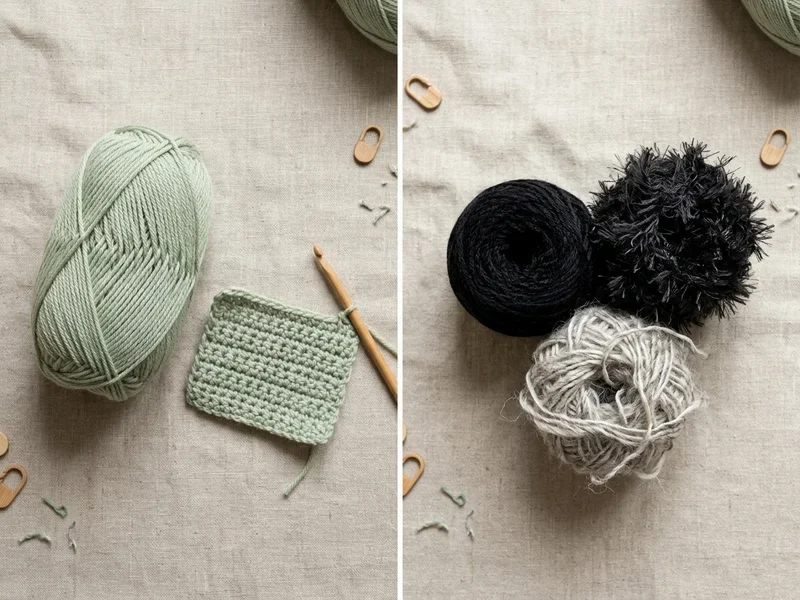
- Black, Navy, or Dark Espresso Yarn: Dark dyes absorb light, turning your stitches into a shadow where you cannot see where to insert your hook.
- Plush Chenille, Velvet, and Eyelash/Bouclé Novelty Yarns: Fluffy pile completely buries the top
Vloops, and chenille yarn sheds or snaps if you have to unravel a mistake. - Loosely Spun Single-Ply Roving: Unplied or lightly twisted roving pulls apart when tugged and splits constantly on the hook tip.
- Busy Multi-Colored Variegated Yarn: Rapid color changes every
2stitches camouflage stitch anatomy, making it hard to spot where a row begins or ends.
Why Your Stitch Markers Must Be "Locking" (Not Closed Rings)
If you buy only one accessory besides your hook and yarn, make it locking stitch markers—and make sure you don't accidentally buy knitting ring markers!

- Knitting Stitch Markers (Closed Rings — Do NOT Buy for Crochet): In knitting, markers sit on the knitting needle between stitches, so they are solid, un-openable metal or plastic O-rings. If you crochet around a closed ring marker, it will be permanently trapped inside your fabric!
- Crochet Stitch Markers (Locking Clips — Buy These): Crochet markers look like small plastic safety pins orbulb pins that open and snap shut. You clip them directly under the top
Vof the first and last stitch of a row, then unclip and move them up on the next row. Plus, when you pause your project for the night, you can clip a locking marker through the live loop on your hook so your work never unravels in your bag.
Should You Buy a Beginner Crochet Kit or Individual Supplies?
Both routes work well depending on how you like to learn:
Buying Option | Best For | What to Watch Out For |
|---|---|---|
Buying the 5 Items Separately | Crocheters who want to practice flat swatches, coasters, dishcloths, or scarves at their own pace with a full-size | Avoid cheap multi-hook "80-piece" zipper kits that bundle tiny thread hooks and miniature |
All-in-One Project Kit | Crocheters who want a single curated box (such as an amigurumi character or beginner accessory) with pre-measured yarn, a matching hook, stuffing, and step-by-step video instructions. | Check that the kit uses smooth tube/t-shirt yarn or plied worsted yarn rather than fuzzy chenille. See our guide to beginner crochet kits for what to look for. |
Nice-to-Have Extras for Later (Skip These on Day 1)
Once you have mastered basic stitches and want to tackle garments, granny square blankets, or lace, you can add these tools one by one:
- Retractable Tape Measure & Rigid Gauge Ruler: For measuring head/bust circumference and checking
4 in × 4 ingauge swatches. - Additional Hook Sizes (
4.0 mm,4.5 mm,6.0 mm): Instead of buying a 12-hook set upfront, buy individual ergonomic hooks in4.0 mm(G-6) and6.0 mm(J-10) as patterns call for them. - Foam Blocking Mats & Rust-Proof T-Pins: For pinning damp granny squares or sweater panels to exact dimensions while drying.
- Yarn Bowl or Project Tote: Keeps your working skein from rolling across the floor while you stitch.
Frequently Asked Questions (FAQ)
What is the absolute minimum I need to start crocheting?
At the bare minimum, you only need one crochet hook (5.0 mm / US H-8) and one ball of smooth #4 worsted-weight yarn in a light solid color—plus a pair of household scissors to cut the yarn and a safety pin or bobby pin to mark the end of your row.
What size crochet hook is best for a complete beginner?
A 5.0 mm (US H-8) or 5.5 mm (US I-9) crochet hook is the universally recommended starting size for beginners. It fits naturally in the hand without cramping your fingers and pairs with standard Category #4 Medium (Worsted) yarn so every stitch loop is large and easy to see.
Is cotton or acrylic yarn better for a beginner?
Both are great choices as long as they are smooth, plied, and light-colored. Smooth worsted acrylic has more elastic give on the hook and survives repeated unraveling without fraying, making it ideal for practice swatches, hats, and blankets. Smooth cotton (or a cotton-acrylic blend) has zero fuzz and shows the sharpest stitch definition, making it wonderful for dishcloths, coasters, and amigurumi—just keep your hand tension relaxed since 100% cotton does not stretch.
Why do my stitches keep disappearing when I practice?
If you cannot tell where one stitch ends and the next begins, check two things: (1) switch from dark or fuzzy yarn to a smooth, light-colored worsted yarn (like cream, sage, or sky blue), and (2) clip a locking stitch marker into the very first stitch and very last stitch of every row so the turning chain never hides the edge.


Questions & notes
No comments yet
Sign in or create a free account to comment under your profile and keep track of your replies.
Your email address is never published. Comments are moderated under our Community Guidelines; see our Privacy Policy for how we use your details.