Calculators · Yarn and hooks
Scrap yarn blanket size calculator
Find the biggest blanket or scarf you can make from the yarn you already have, from a weighed swatch, with checkpoints for corner-to-corner.
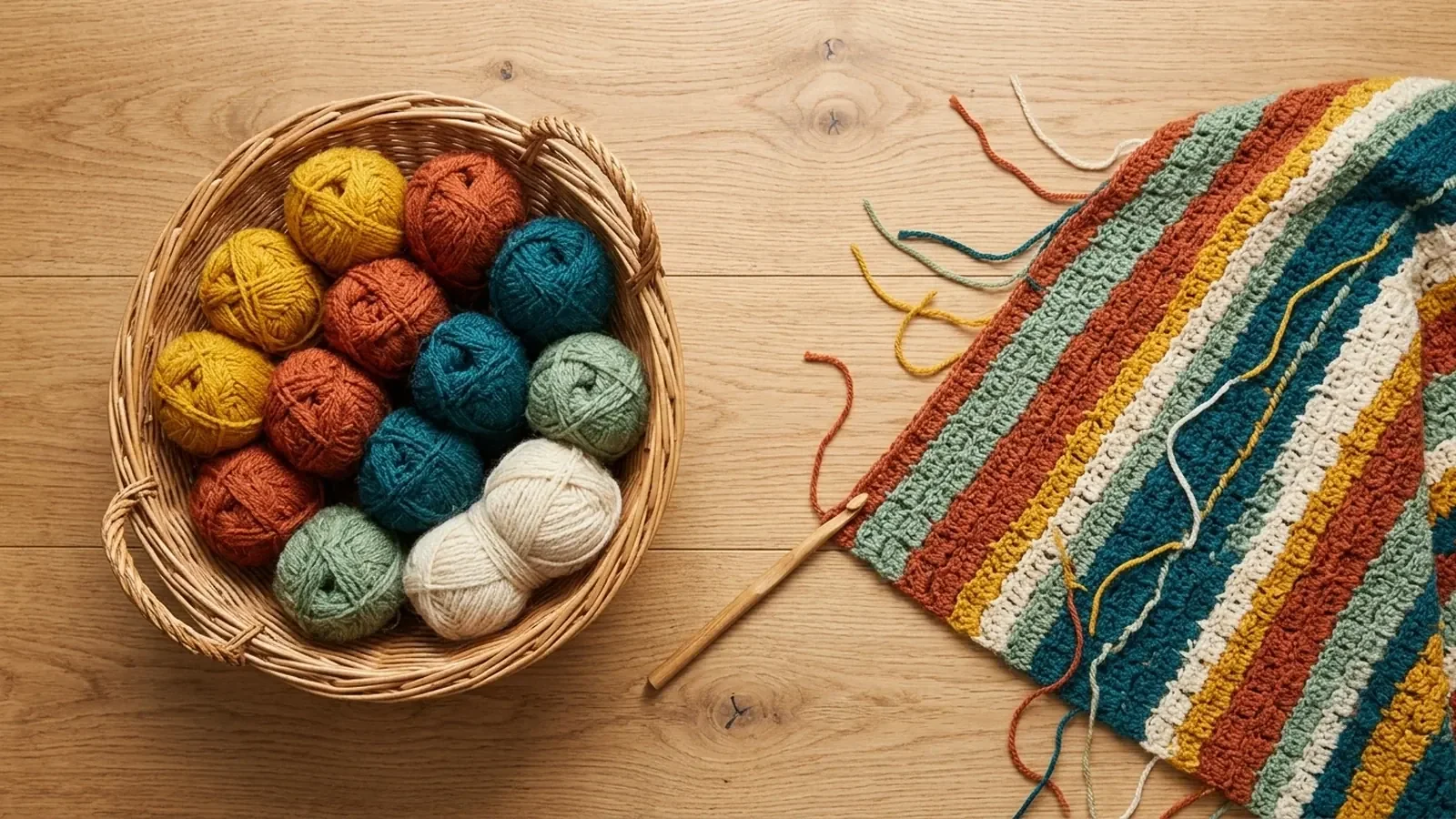
Have a fixed amount of yarn and want to know how big a blanket or scarf it will make? This calculator uses a weighed swatch to find the largest size for the shape you choose. For corner-to-corner blankets it also gives readings for your kitchen scale, so you know when to stop increasing and when to start decreasing.
How to use the calculator
- Weigh all the yarn you have.
- Crochet a swatch in the project's stitch and yarn, and enter its size and weight.
- Choose what to keep fixed: a length-to-width ratio (1 for a square, about 1.2 to 1.3 for a throw, 6 to 8 for a scarf), a set width, or corner-to-corner checkpoints.
- Set the reserve to keep back for weaving in ends; 5% is usual.
How the calculator works
The swatch tells you how much fabric each gram makes:
Area per gram = swatch width × swatch height ÷ swatch weight
Largest area = usable yarn × area per gram, where the usable yarn is what you have minus the reserve.
- Ratio:
width = √(area ÷ ratio)andlength = ratio × width. - Set width:
length = area ÷ width, and with your row gauge, the number of rows. - Corner to corner: a C2C rectangle grows as a triangle, runs straight through the middle, then shrinks as a triangle. With a length-to-width ratio α, the increase uses 1 ÷ (2α) of the yarn, the straight middle (α − 1) ÷ α, and the decrease 1 ÷ (2α). The calculator turns those shares into the weight your scale should show at each turn.
Reading your results
- Largest width and length: the biggest size for your shape.
- Checkpoints (corner to corner): weigh your remaining yarn, including any ball you have started, and change phase when the scale reaches each reading.
Worked example
You have 400 g of worsted scraps and keep back 5%, leaving 380 g. A 6 × 6 in corner-to-corner swatch weighs 12 g, so each gram makes 3 sq in.
- Largest area: 380 × 3 = 1,140 sq in.
- At a ratio of 1.25: width √(1,140 ÷ 1.25) = 30.2 in, length 37.7 in.
- Stop increasing the short side after 380 ÷ 2.5 = 152 g, when the scale reads 248 g.
- Start decreasing after a further 76 g, when it reads 172 g.
- Finish with the 20 g reserve left.
Accuracy and limits
- The arithmetic is exact and covered by our automated tests. The size is only as good as your weighed swatch.
- It assumes every part of the blanket uses the same yarn per square inch. Scraps of different fibres and thicknesses vary; swatch with a typical mix.
- Borders are not included.
- Several small balls need extra for joins; raise the reserve if you have many.
Common mistakes
- Turning a rectangular C2C blanket at half the yarn. Stopping increases at 50% makes a square. For a rectangle, turn earlier: at 40% of the usable yarn for a ratio of 1.25, or a third for 1.5.
- Turning mid-row. Finish the diagonal row you are on before changing phase; the reserve covers it.
- Weighing only the full balls. Include the ball you are working from in the scale reading.
Tips for more accurate results
- Joining scraps with a Russian join or magic knot leaves fewer ends to weave in, so you may be able to keep back less.
- Mix thin scraps with thick ones by holding the thin ones double; the yarn held together calculator shows what two strands make.
- Once you know the size, plan the blocks and rows with the C2C crochet calculator.
Frequently asked questions
How big a blanket can I make with my yarn?
Weigh all of it and a swatch in the same stitch. The calculator multiplies the usable yarn by the area each gram makes and fits that area to the shape you choose.
When should I stop increasing in a corner-to-corner blanket?
For a square, at half the usable yarn. For a rectangle, earlier: the calculator gives the scale reading for your ratio.
What reserve should I keep back?
5% suits most blankets. Keep back more if you have many small balls to join or many colour changes.
Can I use scraps of different weights?
Yes, but they will not all make the same area per gram. Swatch with a typical mix, or hold the thinner scraps double so they match the thicker ones.
Does it include a border?
No. Leave yarn for one, or plan it with the border yarn calculator.
More yarn and hooks calculators
All calculatorsCrochet hook size converter
Convert crochet hook sizes between millimetres, US letters, old UK numbers, Japanese sizes and steel thread hooks, with brand differences flagged.Open the calculatorRemaining yarn calculator
Weigh a partly used ball to find how many yards or metres are left, and whether it is enough to finish your next rows or motifs.Open the calculatorTunisian crochet calculator
Choose a Tunisian hook size, the hook and cable length for your width, and the loops to cast on, for tss, tks, tps and more.Open the calculator

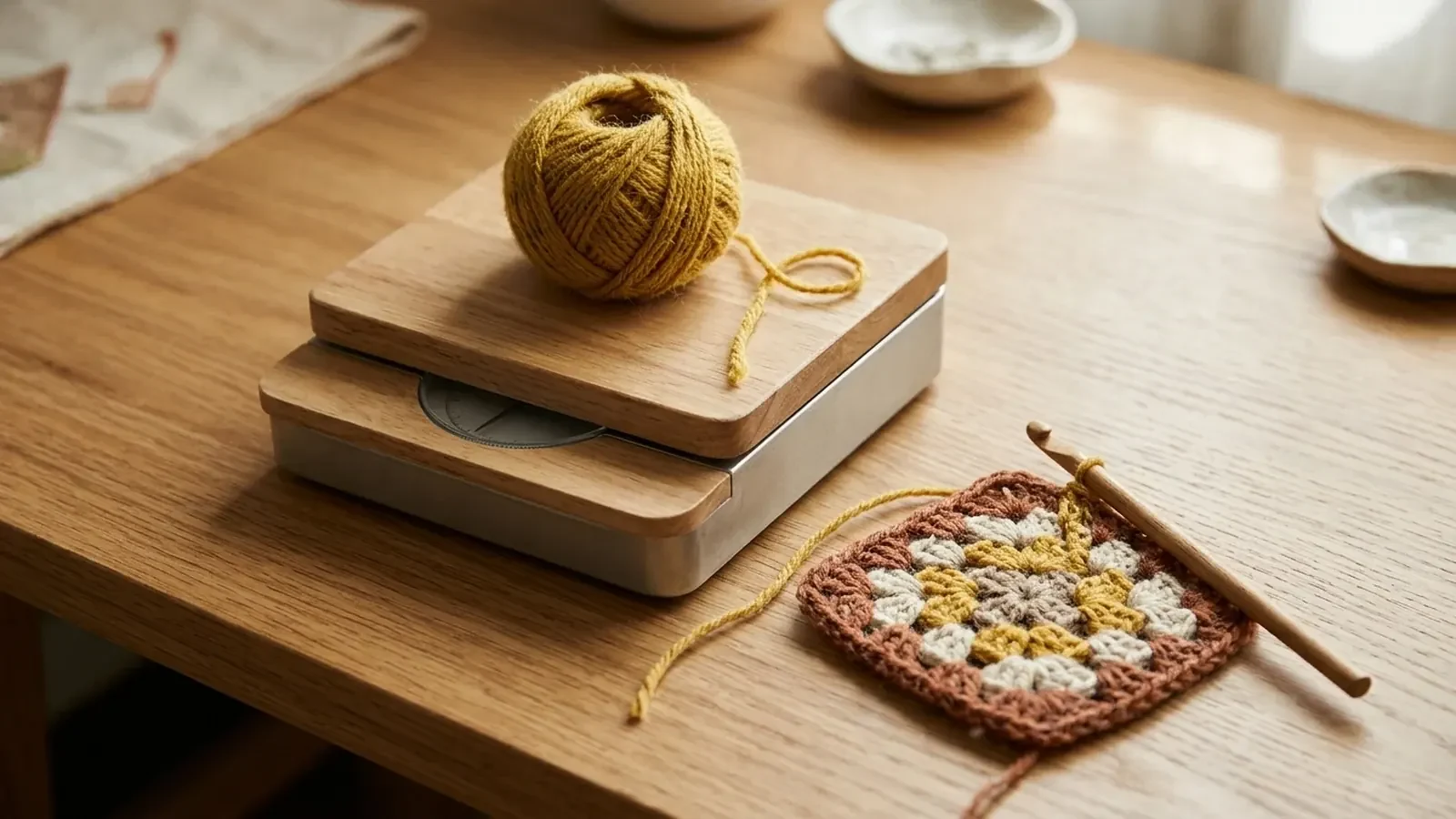

Questions about this calculator
No comments yet
Sign in or create a free account to comment under your profile and keep track of your replies.
Your email address is never published. Comments are moderated under our Community Guidelines; see our Privacy Policy for how we use your details.